
❋
Process | Methodologiesgathering primary customer needs
Case StudyTurning insight into measurable impact
Transforming care journeys through insight-led design
A large healthcare organization sought to improve patient financial transparency across the care journey, ensuring individuals could clearly understand cost implications as treatment progressed. However, existing financial information was fragmented across touchpoints and inconsistently understood, limiting patients’ ability to anticipate and plan for costs over time.
OpportunityMove beyond fragmented, point-in-time cost information and design a clear, end-to-end financial transparency experience across the care journey so patients could understand how costs evolved through treatment progression, make informed decisions at each stage, and experience pricing as a coherent, predictable part of care rather than disconnected estimates.
Shaping Outcomes at ScaleThis work shifted financial transparency from fragmented estimates to a clearer end-to-end experience across the care journey. Patients better understood how costs evolved through treatment progression, especially at key
decision points.
Iterative testing reduced ambiguity and improved consistency in how financial information was presented, increasing patient confidence in understanding and navigating treatment costs. The approach also established a repeatable model for designing and validating financial transparency across future initiatives.
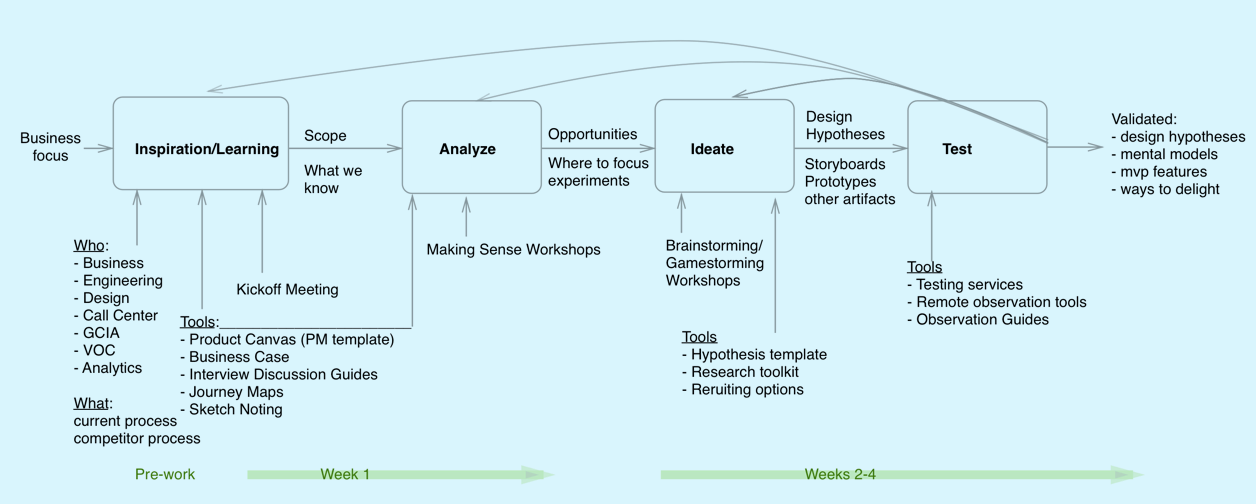
Decision-Making at ScaleTo address this, we ran multiple iterative rounds of design and testing focused on how financial information should be structured, surfaced, and evolved across the care journey. Each cycle of research and design refined clarity, timing, and framing of cost information to better match patient decision points and reduce ambiguity. Through continuous validation, we converged on a model that made financial progression more transparent, contextual, and actionable throughout treatment.
Outcomes at ScaleThis work embedded customer insight into cross-functional planning and execution, shifting decisions from project-level inputs to a shared, consistent driver of prioritization and tradeoffs.
It improved alignment across teams and strengthened the connection between research, Objectives and Key Results, and delivery at scale.
-
"“That first three to six months of not knowing what the diagnosis was going to look like, I wanted someone to talk to and say, hey, it's all right, I'll walk you through it.”
Patient